In this post, I will go over some of the shots Christopher Nolan uses in his movie inception in order to communicate the actors emotions and details to the viewer.
Eye Level Shot
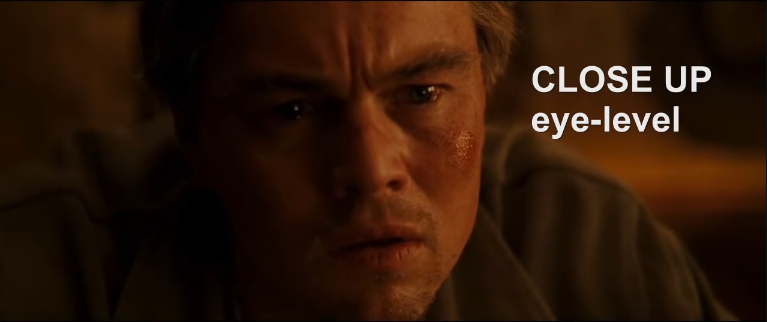
An eye level shot refers to when the level of your camera is placed at the same height as the eyes of the characters in your frame. An eye level camera angle does not require the viewer to see the eyes of the actor, nor does the actor need to look directly into the camera for a shot to be considered eye level. Eye level shots simulate standard human vision and thus present visual information through a familiar viewpoint.
- Dissolve the barrier between viewer and story.
- Humanize their characters with a neutral camera angle.
- Simulate standard human vision and familiar composition.
Crane Shot With Tilt
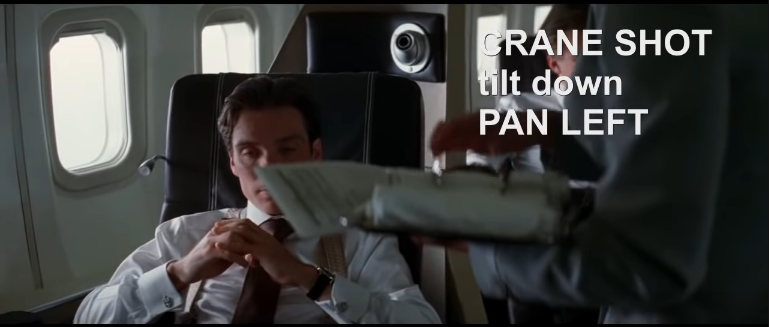
When the crane shoots while moving down in a shot (crane down), it moves the viewer into the story or the scene. There is a feeling of falling into the characters world, or being dropped into the scene. When the crane shoots while going up in a shot from the character to a wide vista (crane up), it gives the audience a feeling of how small the character is or how large this obstacle is that he or she has to overcome. Additionally, the tilt shot is similar to the pan shot, but the tilt shot moves vertically instead of horizontally. In this shot, the camera moves up or down while keeping its horizontal axis constant. This can be used to show the vertical significance of something. Movement of crane high to low angle, which is when the camera moves from a very high shot to a very low shot, makes the character look strong and imposing. It creates a lot of fear. It gives us a feeling of authority.
Away from the crane, directors can use handheld camera movements to create a feeling of uneasiness or danger. It can make the audience feel very strange or dangerous. Panning is a camera movement technique that involves moving the camera horizontally to the right or left. With this technique you can track an object or follow any type of movement. A quick pan can change the emotional direction of the scene, as it reveals something dangerous that the character is going to have to overcome and it sends a the audience in a totally different emotional direction. A quick push in with the camera creates a feeling of surprise or shock.
Extreme Close Up
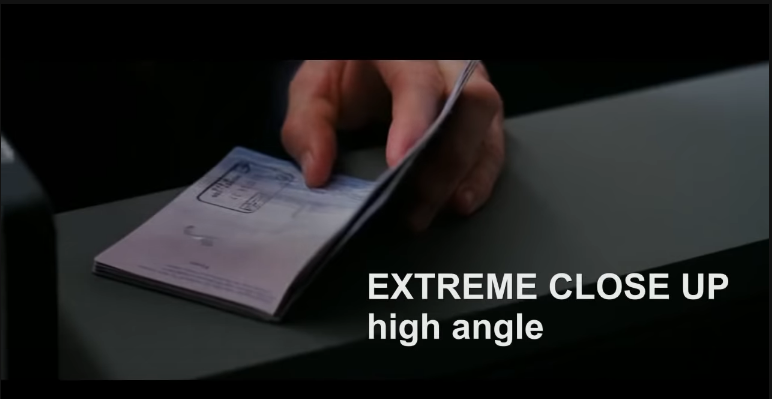
An extreme close-up shot is a shot that frames a subject very closely, often so much so that the outer portions of the subject are cut off by the edges of the frame. On an actor, this is commonly used to show specific portions of the body, like the face or hip, but it can go closer to show only an actor’s eyes or mouth, or even a single eye.
Inanimate objects can also be framed in an extreme close-up shot, but everything is based on the scale and size of the object. If you were to frame a steaming tea-pot in an extreme close-up, you might focus on the spout or base. The idea is that you cannot see the entire subject, but rather are forced to focus on a particular portion, hopefully, for the desired effect.
- To focus the viewer in on a specific portion of the subject.
- To signal an important sensory moment in a scene.
- To communicate tiny details initially too small to notice.

 Too lazy to make a logo